
State of the Metaverse: Will MANA, SAND & AXS Rebound?
Explore the state of the metaverse and whether MANA, SAND, and AXS are poised for revival amid growing Web3 adoption, AI, and blockchain innovation.

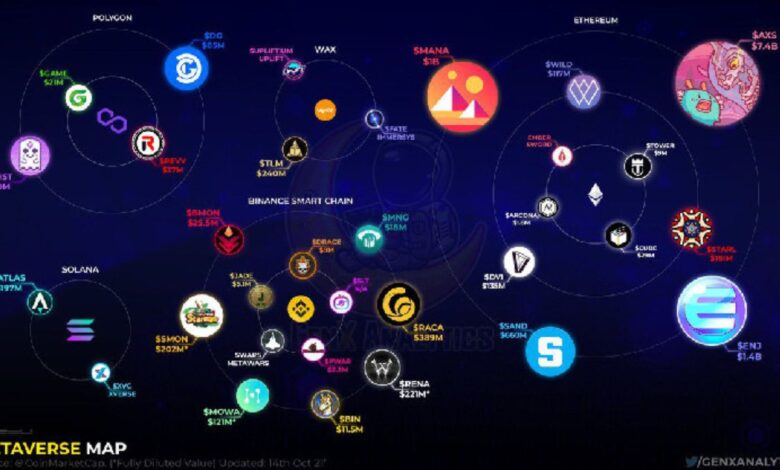
The metaverse was once promoted as the next major evolution of the internet, offering immersive digital spaces where people could work, socialize, play, and build communities in virtual worlds. During the 2021 cryptocurrency bull market, projects such as Decentraland (MANA), The Sandbox (SAND), and Axie Infinity (AXS) captured global attention as investors rushed into blockchain-powered virtual ecosystems. Token prices climbed rapidly, virtual land sales reached impressive highs, and millions of users explored the idea that digital ownership and immersive online environments could reshape the future of interaction.
That momentum did not last forever. Over the following years, the broader crypto market entered a downturn, speculative enthusiasm cooled, and many early metaverse projects struggled to maintain the same level of user activity. As a result, metaverse tokens lost much of their earlier value, leading many observers to question whether the sector had already peaked or whether it was simply undergoing a necessary correction after excessive hype.
Today, however, the conversation around the metaverse is becoming more nuanced. Artificial intelligence, virtual reality (VR), augmented reality (AR), blockchain gaming, digital identity, and enterprise adoption are all helping renew interest in immersive technologies. While the excitement is more measured than it was during the peak of the hype cycle, developers continue to build, major technology companies remain invested in virtual experiences, and blockchain ecosystems are steadily improving.
The Current State of the Metaverse
The metaverse has changed significantly since its first wave of popularity. Instead of focusing only on speculative virtual land purchases, developers are now placing greater emphasis on practical use cases such as gaming, creator economies, digital commerce, education, and social interaction. This shift reflects a broader maturation of the industry and suggests that the metaverse is moving away from pure hype and toward long-term infrastructure development.
Interest in interconnected digital worlds continues to attract attention from technology companies, blockchain developers, gaming studios, and enterprise organizations that are exploring immersive collaboration tools. Although user growth has slowed compared to the early expectations surrounding the sector, innovation has not stopped. In fact, advances in virtual reality, augmented reality, cloud computing, artificial intelligence, and blockchain scalability have strengthened the technical foundation needed for future metaverse expansion.
Rather than disappearing, the metaverse appears to be evolving into a more practical and sustainable digital ecosystem. This transition may take time, but it suggests that the concept still has room to grow if developers can deliver compelling experiences that go beyond speculation.
Why Metaverse Tokens Lost Momentum
The decline in MANA, SAND, and AXS was not caused by a single event. Instead, several market forces worked together to reduce enthusiasm across the sector. The cryptocurrency bear market sharply lowered speculative demand for digital assets, while rising global interest rates encouraged investors to move capital into safer and more predictable investments. At the same time, many early metaverse projects struggled to retain active daily users once the initial excitement faded.
Another important factor was the realization that widespread metaverse adoption would likely take years rather than months. Many investors who entered the market during the hype cycle expected rapid growth, but the reality of building immersive digital worlds proved far more complex. As trading volume declined and investor sentiment weakened, valuations across the sector contracted significantly.
Even so, development did not stop. Many teams continued improving their ecosystems throughout the downturn, laying the groundwork for future growth. This ongoing progress is one reason why some analysts believe the sector may still have long-term potential despite its recent struggles.
Decentraland (MANA): Can Virtual Real Estate Recover?
The Evolution of Decentraland
Decentraland (MANA) remains one of the most recognizable blockchain-based virtual worlds. The platform allows users to purchase virtual land, build interactive experiences, host digital events, and create decentralized applications inside a shared metaverse environment. Over time, Decentraland has expanded beyond the idea of virtual land speculation and now supports education, entertainment, conferences, digital fashion, and community-driven governance.
Developers continue to introduce improvements designed to enhance user experience and encourage more creator participation. These updates are important because a virtual world can only thrive if users have meaningful reasons to return, build, and interact. Decentraland’s long-term success will depend on whether it can continue evolving from a speculative platform into a vibrant digital society.
Strengths Supporting MANA
One of Decentraland’s biggest strengths is its established ecosystem. It already has a recognizable brand, a functioning virtual world, and a community that understands the value of digital ownership. Thousands of virtual land parcels remain available for development, and the platform’s decentralized governance model gives users a voice in shaping its future.
Another advantage is that major brands have previously experimented with digital experiences inside Decentraland, which shows that there is broader commercial interest in virtual environments. If creator tools continue improving, more users may be encouraged to build content, host events, and develop experiences that attract new participants. This kind of ecosystem growth could help support long-term demand for MANA.
Challenges Facing MANA
Despite these strengths, Decentraland still faces important challenges. User engagement remains one of the biggest concerns because virtual worlds depend heavily on active communities. Without sustained participation, land values and ecosystem activity may struggle to recover. Competition from newer virtual platforms also adds pressure, forcing Decentraland to innovate continuously if it wants to remain relevant.
For MANA to regain momentum, the platform must prove that it can offer more than speculative land ownership. It needs to deliver immersive, useful, and socially engaging experiences that keep users coming back over time.
The Sandbox (SAND): Building a Creator Economy
Expanding Beyond Gaming
The Sandbox (SAND) has positioned itself as more than just a blockchain game. Its ecosystem is designed to empower creators to build interactive virtual experiences, monetize digital assets, and develop community-driven content. This creator-focused model sets The Sandbox apart from many traditional gaming platforms because it gives users more control over what they build and how they earn from it.
The platform’s emphasis on user-generated content is especially important in the context of the metaverse. A successful virtual world needs a steady flow of fresh experiences, and The Sandbox aims to make that possible by giving creators the tools they need to participate actively in the ecosystem.
Strategic Partnerships
One of The Sandbox’s strongest advantages is its network of partnerships. The project has secured collaborations with entertainment companies, gaming brands, celebrities, and global businesses, all of which help increase visibility and attract new users. These partnerships also support broader awareness of blockchain-powered virtual worlds by showing that major brands are willing to experiment with digital experiences.
Brand engagement can be a powerful growth driver because it brings credibility and attention to the platform. If The Sandbox continues to expand its partnerships while improving accessibility, it may be able to strengthen its position as one of the leading metaverse cryptocurrencies.
Long-Term Potential
The long-term outlook for SAND depends heavily on whether user-generated content continues to grow. Creator economies often become more valuable over time because each new participant adds more experiences, more engagement, and more reasons for others to join. If The Sandbox can maintain this cycle, it may benefit from strong network effects.
Accessibility will also matter. The easier it becomes for users to create, explore, and trade digital assets, the more likely the platform is to attract a broader audience. For that reason, The Sandbox remains one of the most interesting projects in the metaverse space.
Axie Infinity (AXS): Reinventing Blockchain Gaming
From Play-to-Earn to Sustainable Gaming
Axie Infinity (AXS) became one of the most successful blockchain games during the crypto boom, largely because its play-to-earn model introduced millions of players to blockchain gaming. At its peak, the game demonstrated how digital ownership and token rewards could create a new kind of gaming economy. However, rapid growth also exposed serious sustainability issues, especially around inflation and reward balance.
In response, developers have shifted toward building a healthier in-game economy that focuses more on long-term engagement than on speculative rewards. This transition is important because blockchain games must offer enjoyable gameplay first if they want to survive beyond the hype cycle. Axie Infinity’s future will depend on whether it can successfully balance entertainment, ownership, and economic stability.
Ecosystem Improvements
The Axie ecosystem continues to evolve through gameplay updates, infrastructure improvements, competitive features, and governance changes. These updates are intended to improve player retention while reducing the inflationary pressures that previously weakened the economy. By refining the game experience and strengthening the underlying token model, the team is trying to create a more durable foundation for growth.
This evolution matters because AXS is no longer just a speculative gaming token. It is part of a broader effort to prove that blockchain gaming can be both fun and economically sustainable. If the ecosystem continues improving, Axie Infinity may still have room to recover.
Can AXS Recover?
The recovery of AXS will likely depend on whether the project can attract both new and returning players. Strong gameplay, balanced tokenomics, and expanding utility will matter far more than short-term speculation. If the game can deliver a compelling experience that keeps users engaged over time, it may regain relevance in the broader blockchain gaming market.
Axie Infinity has already shown that it can capture global attention. The challenge now is to prove that it can maintain that attention through quality, innovation, and sustainable design.
Artificial Intelligence Could Accelerate the Metaverse
Artificial intelligence is emerging as one of the most important catalysts for future metaverse growth. AI-powered non-player characters, intelligent digital assistants, automated content generation, and personalized virtual experiences could dramatically improve immersion and make virtual worlds feel more dynamic. Developers are increasingly integrating AI, machine learning, and procedural generation into digital environments to reduce development costs and create richer interactions.
These technologies may also make metaverse platforms more accessible to mainstream users. If AI can simplify content creation and improve the quality of virtual interactions, more people may be willing to spend time in these environments. This could benefit projects like MANA, SAND, and AXS, especially if they continue to evolve alongside broader technological trends.
Virtual Reality and Augmented Reality Adoption
The long-term success of the metaverse is closely tied to the growth of VR and AR technology. Modern headsets are becoming lighter, more affordable, and more capable, while improvements in graphics, motion tracking, and latency are making immersive experiences more realistic. As hardware adoption expands, blockchain-based virtual worlds may benefit from a larger and more engaged user base.
Greater accessibility could also increase demand for digital assets within metaverse ecosystems. If more people can easily enter virtual environments, they may be more likely to buy land, avatars, collectibles, and other digital items. This makes VR and AR adoption a key factor in the future of the metaverse.
Blockchain Technology Remains the Foundation
Unlike traditional online games, blockchain-based metaverse platforms give users genuine ownership of digital assets. Through NFTs, cryptocurrencies, and decentralized infrastructure, participants can control virtual land, avatars, collectibles, and digital identities. This ownership model remains one of the most important differences between metaverse ecosystems and conventional gaming platforms.
Blockchain also enables transparent marketplaces where users can buy, sell, and trade digital assets freely. This creates a more open and flexible digital economy, which is one reason why blockchain continues to play such a central role in the metaverse narrative. Without blockchain, many of the ownership and interoperability features that define these platforms would not be possible.
Institutional Interest in the Metaverse
Although public excitement has cooled, enterprise interest in the metaverse remains surprisingly resilient. Technology companies continue investing in immersive collaboration tools, retail brands are experimenting with virtual commerce, educational institutions are exploring digital learning environments, and financial organizations are investigating tokenized virtual economies. This suggests that the metaverse still has relevance beyond retail speculation.
Institutional participation may prove especially important in the long run because it can provide stability, funding, and credibility. Even if retail enthusiasm remains subdued for now, enterprise adoption could help support the next phase of metaverse development. That makes the sector more durable than many critics assume.
Challenges Preventing a Full Revival
Despite improving fundamentals, several obstacles still stand in the way of a full metaverse revival. User adoption is growing more slowly than many early forecasts predicted, and hardware costs continue to limit widespread VR participation. Regulatory uncertainty also affects parts of the digital asset industry, creating additional caution among investors and developers.
Competition from traditional gaming companies remains intense as well. Many mainstream studios are now exploring their own digital worlds, which means blockchain-based projects must work harder to stand out. At the same time, developers need to give consumers a compelling reason to spend meaningful time inside virtual environments. Solving these challenges will require patience, innovation, and consistent execution over several years.
Price Outlook for MANA, SAND, and AXS
From a market perspective, MANA, SAND, and AXS remain heavily influenced by broader cryptocurrency trends. If Bitcoin and Ethereum continue to strengthen during future market cycles, metaverse cryptocurrencies may once again attract renewed investor interest. However, price recovery will likely depend on more than just market sentiment.
Each project has its own strengths. MANA benefits from an established virtual world, SAND emphasizes creator-driven content and strategic partnerships, and AXS continues refining blockchain gaming economics. Their future price performance will likely depend on ecosystem growth, user adoption, developer activity, and overall market confidence rather than speculation alone. In other words, fundamentals will matter more than hype.
Are MANA, SAND, and AXS Poised for Revival?
The answer appears cautiously optimistic. Unlike the speculative environment of 2021, today’s metaverse projects are increasingly focused on sustainable development. Infrastructure continues to improve, artificial intelligence is enhancing user experiences, virtual reality hardware is advancing, and blockchain technology is becoming more scalable. These developments suggest that the sector still has room to grow.
Although explosive short-term gains cannot be guaranteed, the long-term outlook appears stronger than current sentiment may suggest. Projects that deliver meaningful utility while maintaining active communities are the most likely to recover. For that reason, MANA, SAND, and AXS should not be dismissed simply because they have fallen from their highs. They remain among the most established names in the metaverse space and could benefit if the next wave of adoption arrives.
The Future of the Metaverse Ecosystem
The metaverse will likely evolve gradually rather than through a sudden breakthrough. Future virtual environments may combine gaming, education, remote work, commerce, entertainment, digital identity, and artificial intelligence into more unified experiences. Instead of replacing the internet, the metaverse may become another layer of digital interaction. That complements the online world we already use.
Blockchain-based ownership, decentralized governance, and programmable digital assets could play central roles in this evolution. If broader adoption accelerates, projects like MANA, SAND, and AXS may be among the biggest beneficiaries. Because they already have brand recognition, active communities, and established ecosystems. Their ability to adapt will determine how much of that future they can capture.
Conclusion
The state of the metaverse has changed dramatically since its explosive rise during the cryptocurrency boom. While MANA, SAND, and AXS have all experienced major declines from their all-time highs, their ecosystems continue to evolve through technological innovation, ecosystem expansion, and improved user experiences. The narrative has shifted from speculative excitement toward sustainable development, and that shift may ultimately strengthen the sector over time.
Artificial intelligence, virtual reality, blockchain infrastructure, creator economies, and institutional interest are all helping build a more durable foundation for the metaverse. Although challenges such as user adoption, competition, and regulation remain. The leading metaverse projects appear better positioned today than they were during the height of the hype cycle. If broader cryptocurrency markets remain supportive and immersive technologies continue advancing, MANA, SAND, and AXS could be well placed for a gradual revival.
